Captured in Summer 2026 at Sunrise
Union Bank of Australia (1865)
History
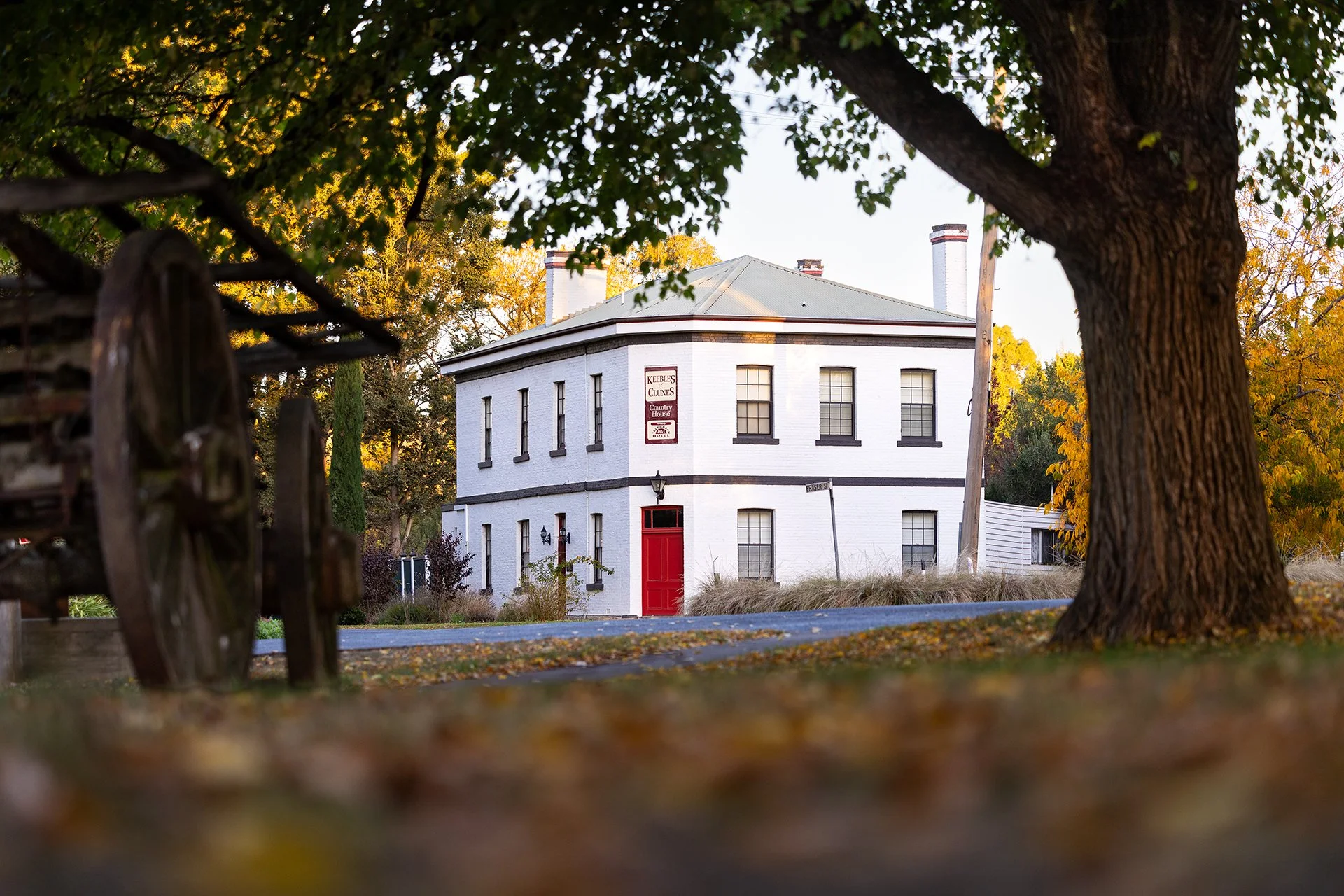
By the mid-1860s, Clunes had established itself as one of Victoria's wealthiest gold mining centres. The success of its quartz mines generated enormous economic activity, creating demand for permanent financial institutions to support miners, businesses and investors. In response, the Union Bank of Australia established an impressive branch on the corner of Fraser and Templeton Streets in 1865, providing banking services to a community whose prosperity had grown from the goldfields.
The bank was among the earliest of several substantial financial institutions to establish branches in Clunes during the gold rush era. As confidence in the town continued to grow, other major banks soon followed, including the National Bank, London Chartered Bank and State Savings Bank, transforming Fraser Street into one of the most important commercial precincts on the Victorian goldfields. Together with nearby civic buildings such as the Town Hall, Free Library and Post Office, these institutions reflected a community investing not only in mining, but in its long-term future.
In 1869, a residence was added to the rear of the bank, allowing the manager to live on site, a common practice for country bank branches during the nineteenth century. The building continued to serve the community for many decades before eventually closing as a banking premises. Rather than being lost to redevelopment, it found a new purpose and today has been carefully adapted for use as accommodation, gallery and creative spaces, ensuring that one of Clunes' most distinguished commercial buildings continues to play an active role within the town.
More than 160 years after its construction, the former Union Bank remains an important landmark within Fraser Street's remarkably intact nineteenth-century streetscape. It stands as a lasting reminder of the prosperity that gold brought to Clunes and the confidence that inspired the construction of such substantial and enduring buildings.
Architectural Features
The former Union Bank is regarded as one of the finest surviving commercial buildings in Clunes. Constructed from locally quarried bluestone, its elegant façade displays the confidence and permanence expected of a prosperous nineteenth-century bank. Tall arched windows, finely detailed stone masonry and balanced classical proportions create a dignified presence that still dominates its prominent corner site.
The building is possibly the work of renowned Melbourne architect Leonard Terry, who was responsible for designing many of Victoria's most significant bank buildings during the nineteenth century. Although this attribution has not been conclusively confirmed, the refined classical detailing and architectural composition closely resemble Terry's work elsewhere across Victoria. A manager's residence, added in 1869, complements the original banking chamber and contributes to the building's historical significance.
Today, the former Union Bank remains one of the defining architectural landmarks of Fraser Street. Alongside neighbouring banks, hotels and public buildings, it contributes to one of Australia's most remarkably preserved gold rush streetscapes.
Continue Exploring Clunes