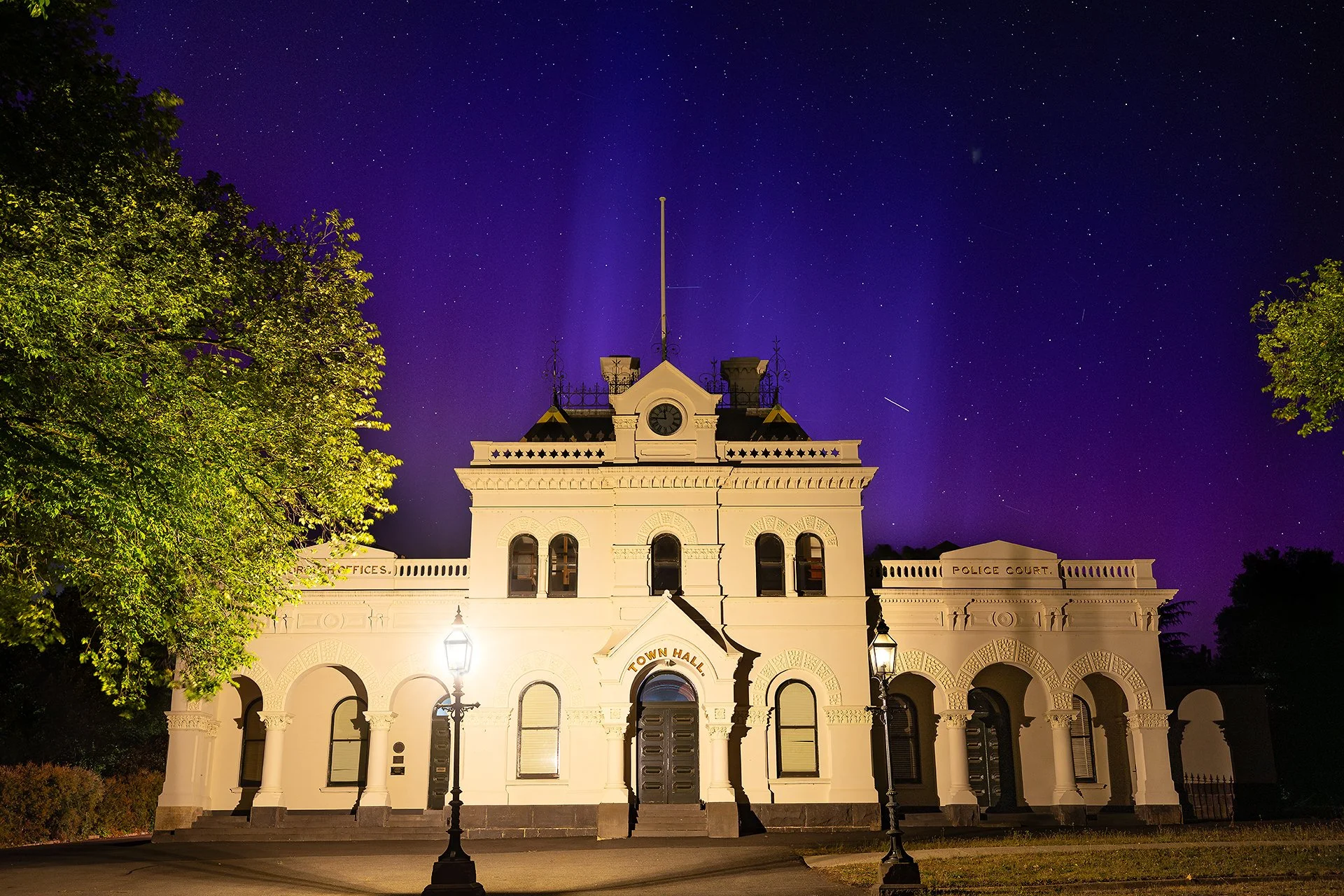
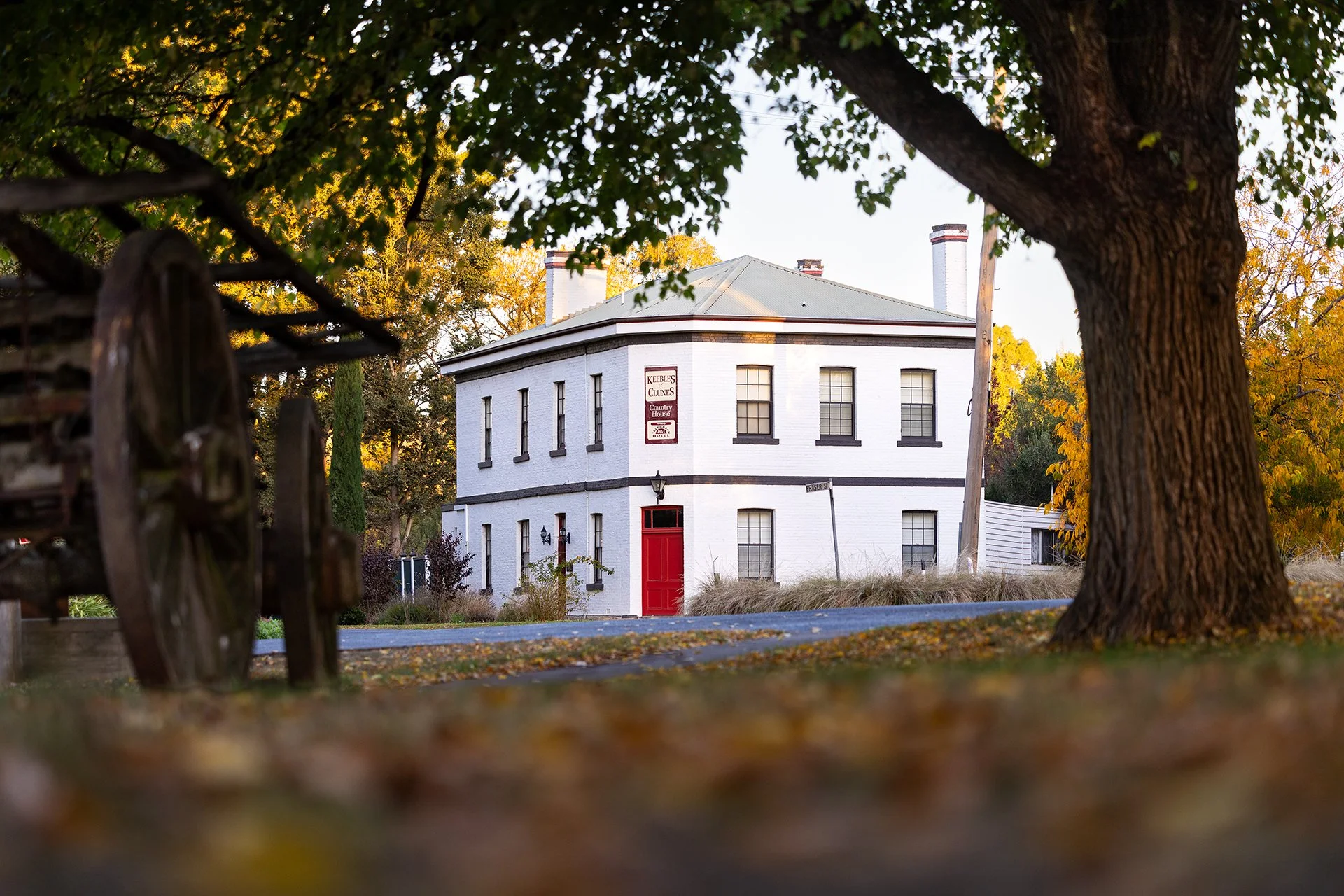
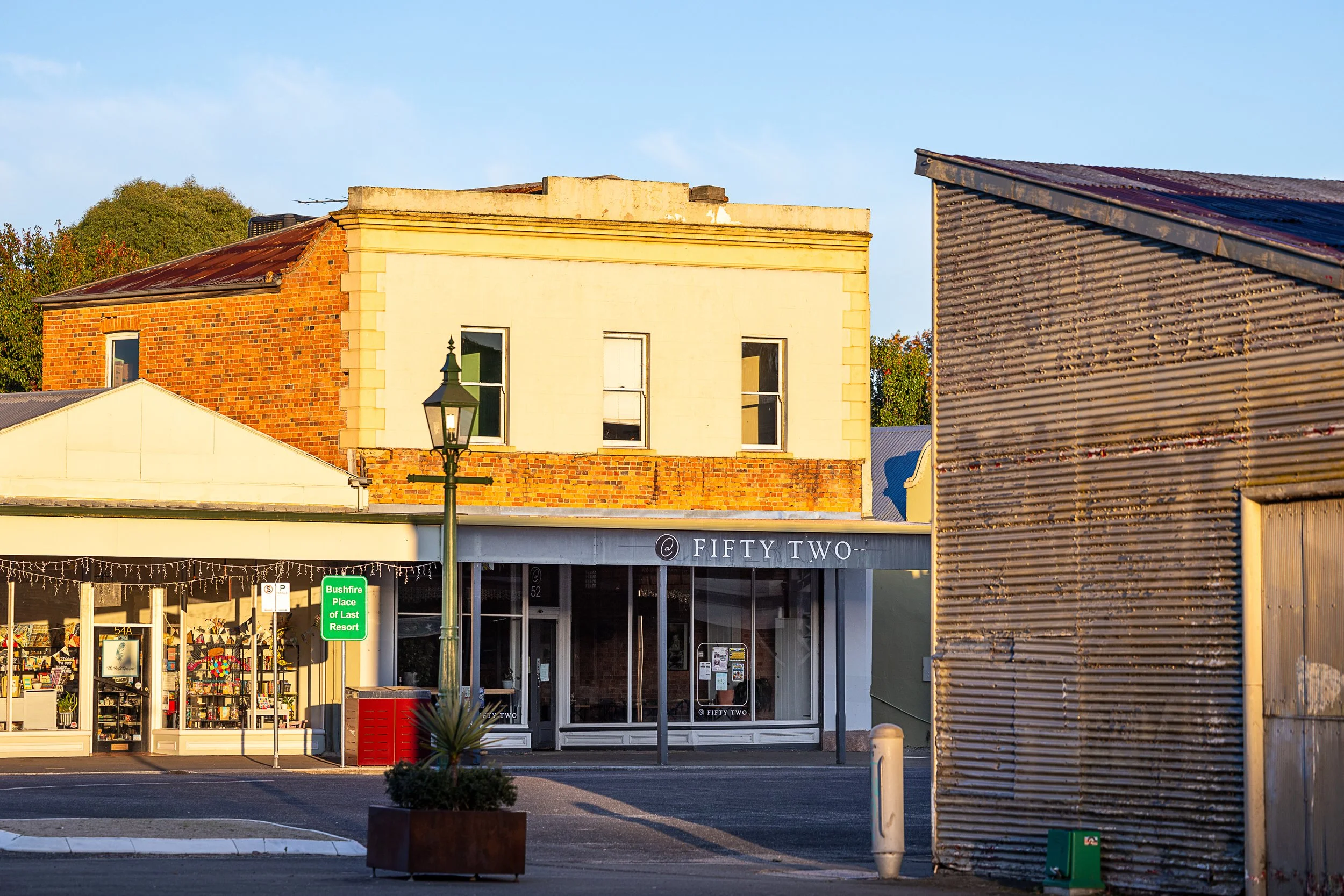
Captured during Autumn 2026 at sunrise using a Canon EOS R5 Mark II
State Savings Bank (1913)
History
By the early twentieth century, Clunes had evolved well beyond its gold rush origins. Although mining had declined, the town remained an important regional centre supported by agriculture, local businesses and a close-knit community. Rather than serving the booming mining industry of previous decades, the State Savings Bank of Victoria was established to encourage ordinary Australians to save for the future, reflecting a broader shift towards financial security and public confidence.
Completed in 1913, the Clunes branch became part of the expanding State Savings Bank network across Victoria. Unlike the grand commercial banks built during the height of the gold rush, the State Savings Bank focused on serving everyday residents. Farmers, shopkeepers, tradespeople and local families relied on the bank for savings accounts and financial services, making it an important part of daily life within the community.
The building represented a new era in Fraser Street's history. Earlier landmarks such as the Union Bank, London Chartered Bank, Town Hall and Post Office had been constructed during Clunes' most prosperous mining years, while the State Savings Bank demonstrated that the town continued to grow and adapt long after the gold rush had passed. Together, these buildings illustrate more than half a century of architectural and economic development, from the optimism of the 1860s through to the confidence of the early twentieth century.
Although banking practices have changed dramatically over the past century, the building remains one of Fraser Street's defining landmarks. Its continued presence contributes to the remarkable streetscape that has made Clunes one of Australia's best-preserved goldfields towns, reminding visitors that the town's history extends well beyond the era of gold.
Architectural Features
Completed in 1913, the State Savings Bank is an elegant example of Edwardian Classical architecture. Constructed from red face brick with finely detailed rendered dressings, the building presents a refined and dignified appearance that reflected the trust and stability expected of government financial institutions.
The symmetrical façade is distinguished by its decorative parapet, large arched windows, classical pilasters and carefully proportioned detailing. While more restrained than the elaborate bluestone banks of the nineteenth century, the building demonstrates the changing architectural tastes of the early 1900s while maintaining the high standard of craftsmanship evident throughout Fraser Street.
Today, the former State Savings Bank provides an architectural bridge between Clunes' gold rush heritage and its twentieth-century development. Alongside the neighbouring Union Bank and London Chartered Bank, it helps tell the story of a community that continued to evolve long after the excitement of the goldfields had faded.
Continue Exploring Clunes