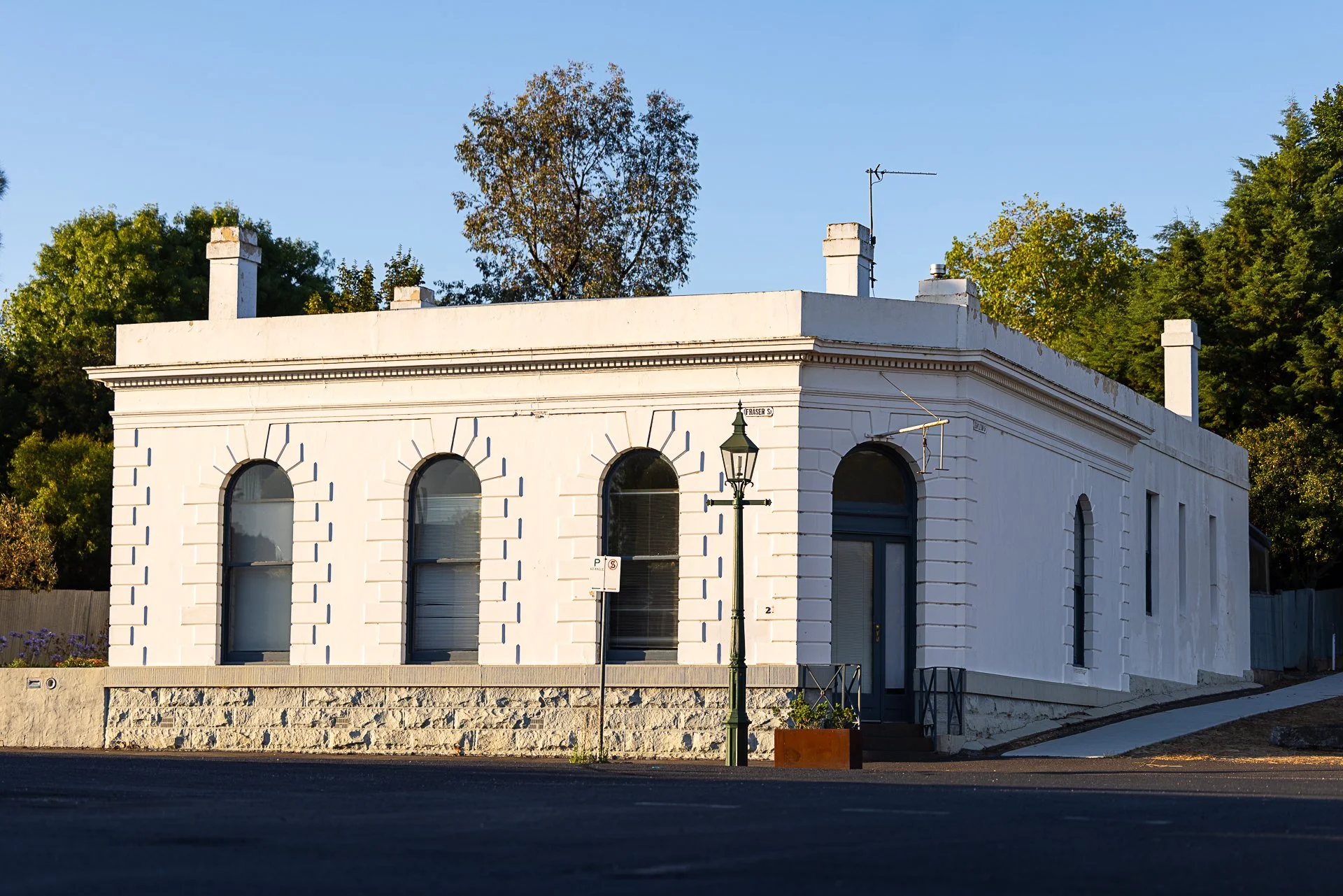
Captured in Autumn 2026 at Sunset
Telegraph Hotel Clunes (c.1863)
History
Constructed around 1863, the Telegraph Hotel occupied one of the most prominent sites in Clunes, standing at the intersection of Fraser and Bailey Streets as the town rapidly expanded following Victoria's first major gold discoveries. During the height of the gold rush, hotels were far more than places of accommodation. They served as meeting places, business centres and social hubs, welcoming miners, travellers, merchants and locals alike. Positioned on one of Clunes' busiest corners, the Telegraph Hotel quickly became an important part of the town's commercial and social life.
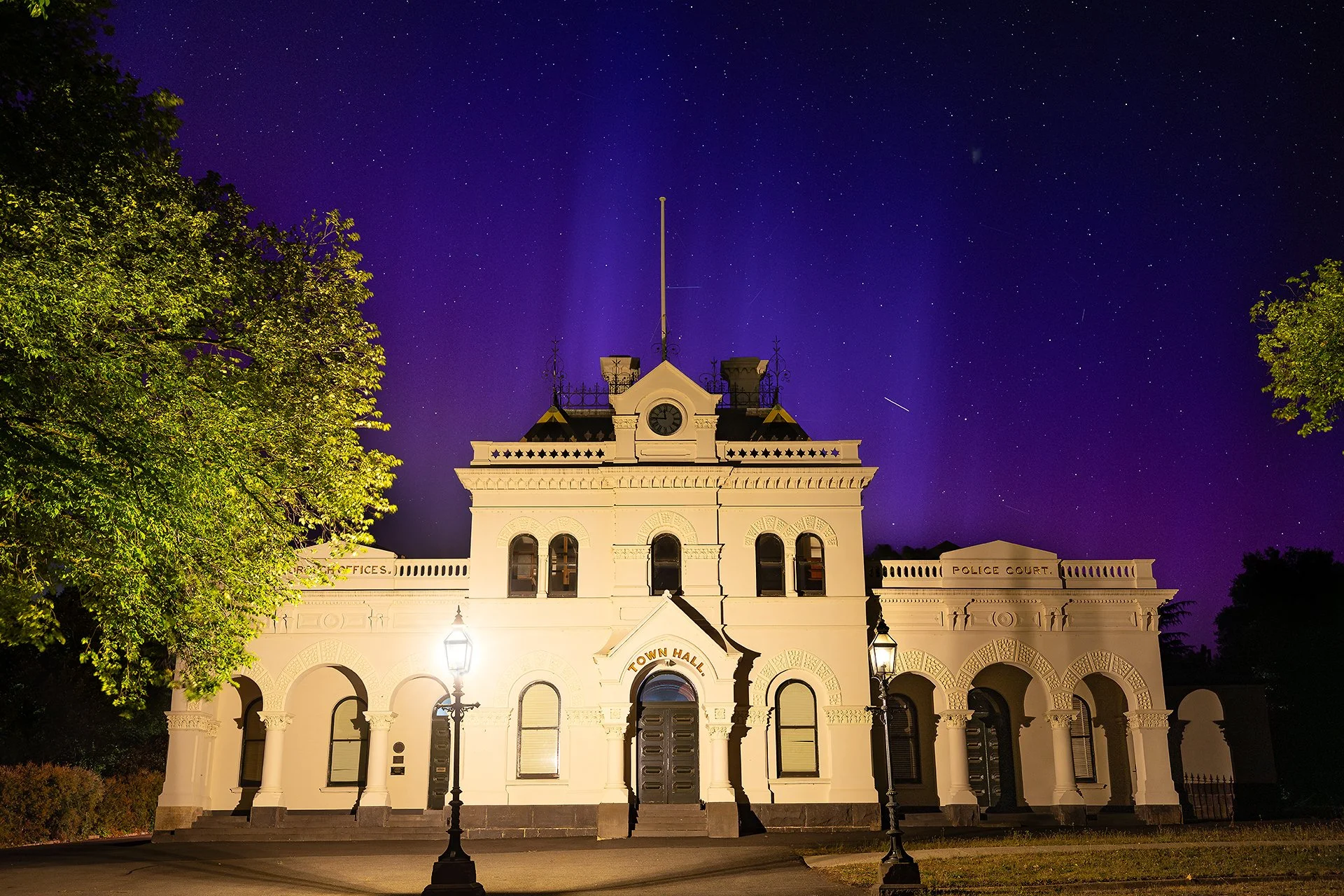
The building predates many of Clunes' grand civic buildings. When it first opened, the Town Hall, Free Library and Post Office had yet to be constructed, and Fraser Street was still developing into the elegant commercial precinct seen today. As Clunes prospered through the 1860s and 1870s, substantial public buildings gradually rose around the hotel, reflecting the confidence and wealth generated by the gold industry. Together, these buildings created the remarkably intact nineteenth-century streetscape that continues to define Clunes today.
During its long history, the building's role evolved alongside the town itself. As the importance of coaching inns declined, the former Telegraph Hotel found new uses and eventually became closely associated with the Keeble family, leading many locals to simply know it as Keeble's. Although its purpose changed over time, the building remained a familiar landmark and an enduring part of everyday life in Clunes. The Clunes Museum continues to identify it as the original Telegraph Hotel, preserving the connection between its earliest history and its later local identity.
Today, the former Telegraph Hotel remains one of the most photographed buildings in Clunes. Its commanding corner position and beautifully preserved nineteenth-century architecture make it an important contributor to the town's heritage streetscape and a lasting reminder of the optimism and prosperity that shaped Victoria's first officially recognised gold town.
Architectural Features
The former Telegraph Hotel is a fine example of Victorian commercial architecture, occupying a prominent splayed corner site that was characteristic of many important hotels throughout the nineteenth century. Constructed from locally quarried bluestone, the building features symmetrical proportions, tall chimneys, elegant masonry detailing and a distinctive corner entrance designed to address both Fraser and Bailey Streets. This corner treatment gave the hotel a commanding presence within the growing township and reflected its importance as a public gathering place.
Despite changes to its use over more than 160 years, the building retains much of its original character and continues to make a significant contribution to Clunes' exceptionally well-preserved goldfields streetscape. Together with neighbouring civic and commercial buildings, it helps tell the story of a town whose nineteenth-century prosperity remains visible in its architecture today.
Continue Exploring Clunes