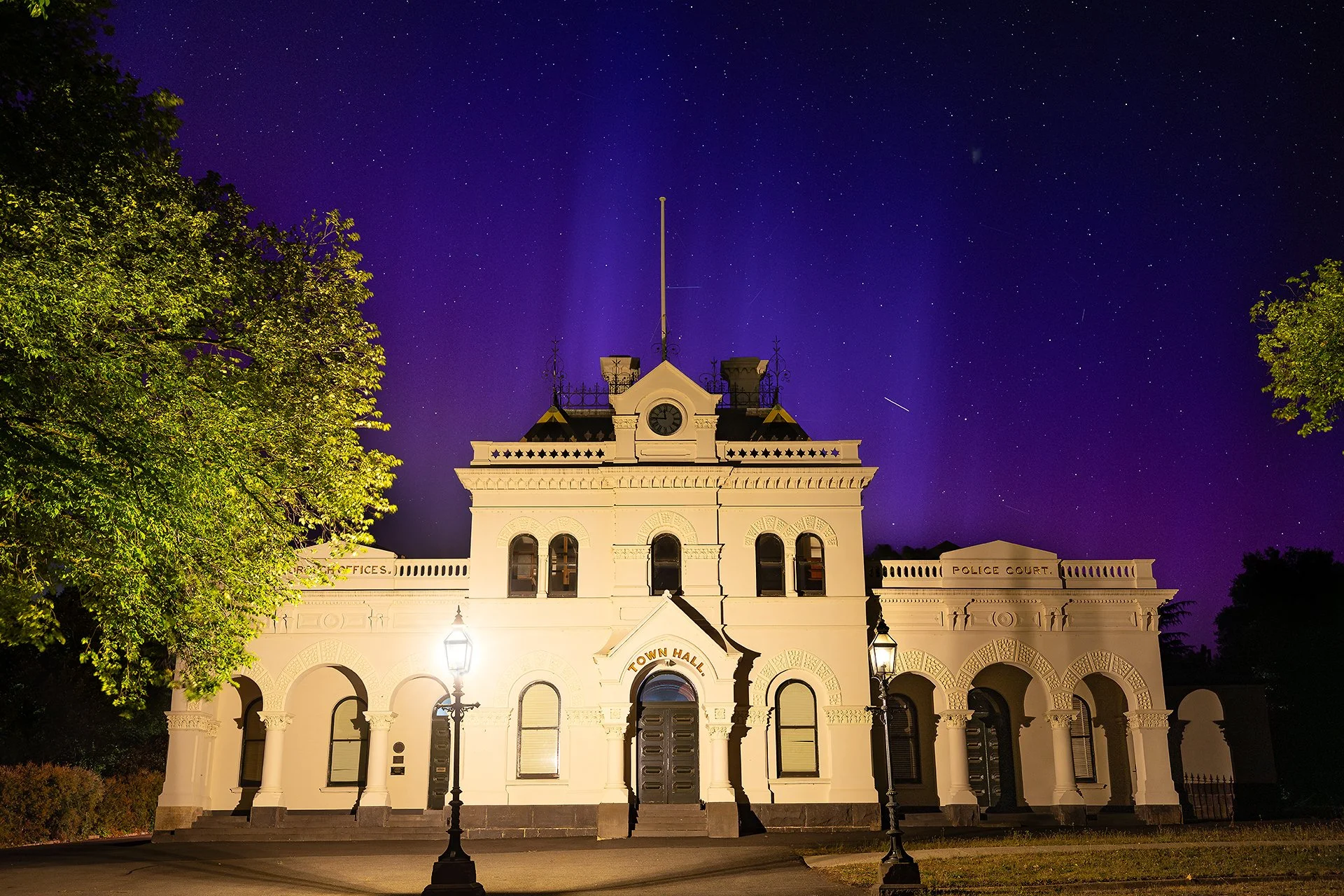
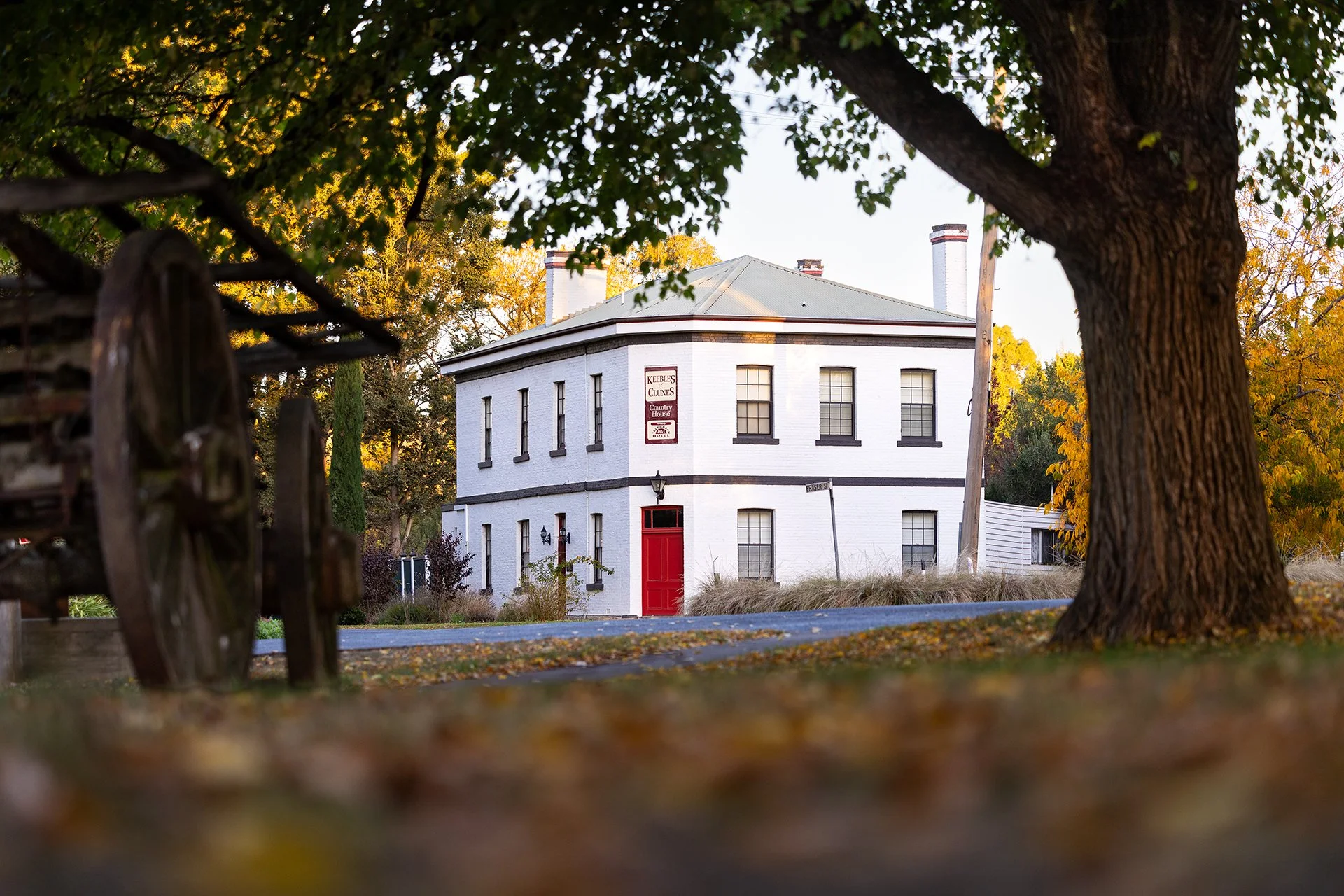
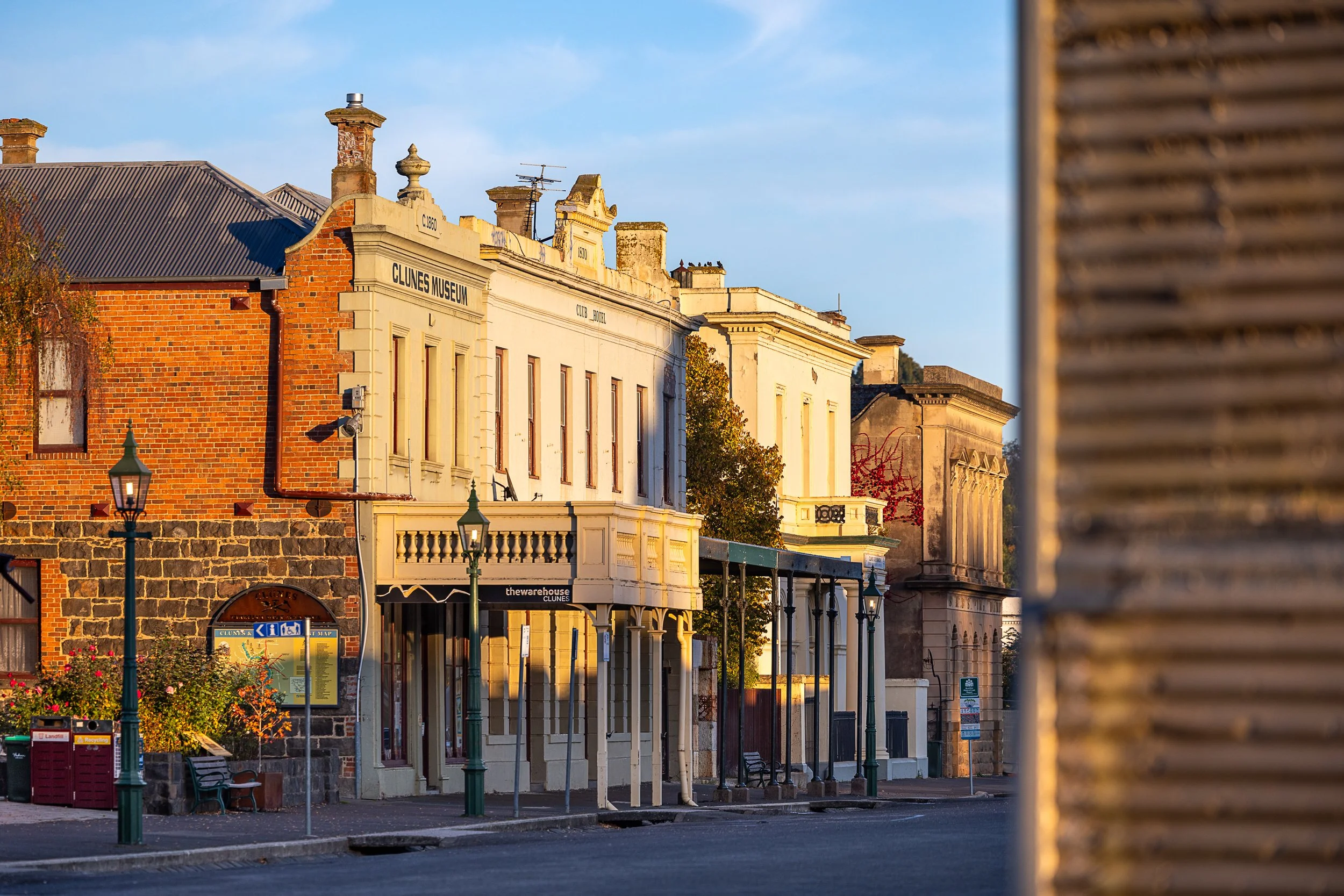
Captured in Autumn 2026 at Sunrise
Former South Clunes State School (1882)
History
Education has been part of this site since 1857, when one of Clunes' earliest schools was established to serve the rapidly growing goldfields community. As Victoria's first gold town expanded, hundreds of children arrived with their families, quickly outgrowing the original school buildings. By the late 1870s, it was clear that a larger and more modern school was needed.
The present building was completed in 1882, replacing the earlier brick schoolhouse built in 1865. Designed by the Education Department under Chief Architect Henry Bastow, it reflected the growing importance of public education in regional Victoria. Spacious classrooms, improved lighting and generous verandahs provided a modern learning environment for the hundreds of children attending school during Clunes' peak years. In 1892, following the opening of the North Clunes State School, the building became the infant school before eventually closing in 1922.
The building's story did not end with education. Rather than being demolished, it found a new purpose as the Clunes Knitting and Manufacturing Company, later operating as the Interknit Mill for more than four decades. The conversion reflected Clunes' transition from a mining town to a diverse regional community, with the former classrooms becoming a place of employment for generations of local residents. While nearby landmarks such as the Town Hall, Post Office and Free Library continued their original civic roles, the former school demonstrated how heritage buildings could successfully adapt to changing community needs.
Since 1985, the building has been home to the Lee Medlyn Home of Bottles, one of Australia's most significant collections of historic bottles. Donated by local collector George Lee Medlyn and later expanded through volunteer efforts, the museum now houses thousands of bottles spanning more than two centuries of Australian history. Today, the building continues to educate visitors, preserving not only the story of Clunes' schools but also its industrial and social heritage for future generations.
Architectural Features
Designed by Henry Bastow, Chief Architect of Victoria's Education Department, the former South Clunes State School is an excellent example of late nineteenth-century school architecture. Constructed from locally quarried bluestone with brick detailing, the building combines durability with practicality, reflecting the Department's commitment to well-designed public education facilities.
Large timber-framed windows flood the classrooms with natural light, while the wide verandah was an innovative feature that provided shelter from the weather and additional teaching space. The steeply pitched roof, symmetrical composition and robust masonry construction give the building a dignified civic presence that complements Clunes' wider collection of nineteenth-century public buildings.
Although its interior has been adapted over time for industrial and museum use, the building retains much of its original character and remains one of Clunes' most significant educational landmarks. Its continued use as the Clunes Bottle Museum ensures it remains an active part of the community, more than 140 years after it first welcomed local schoolchildren.
Continue Exploring Clunes