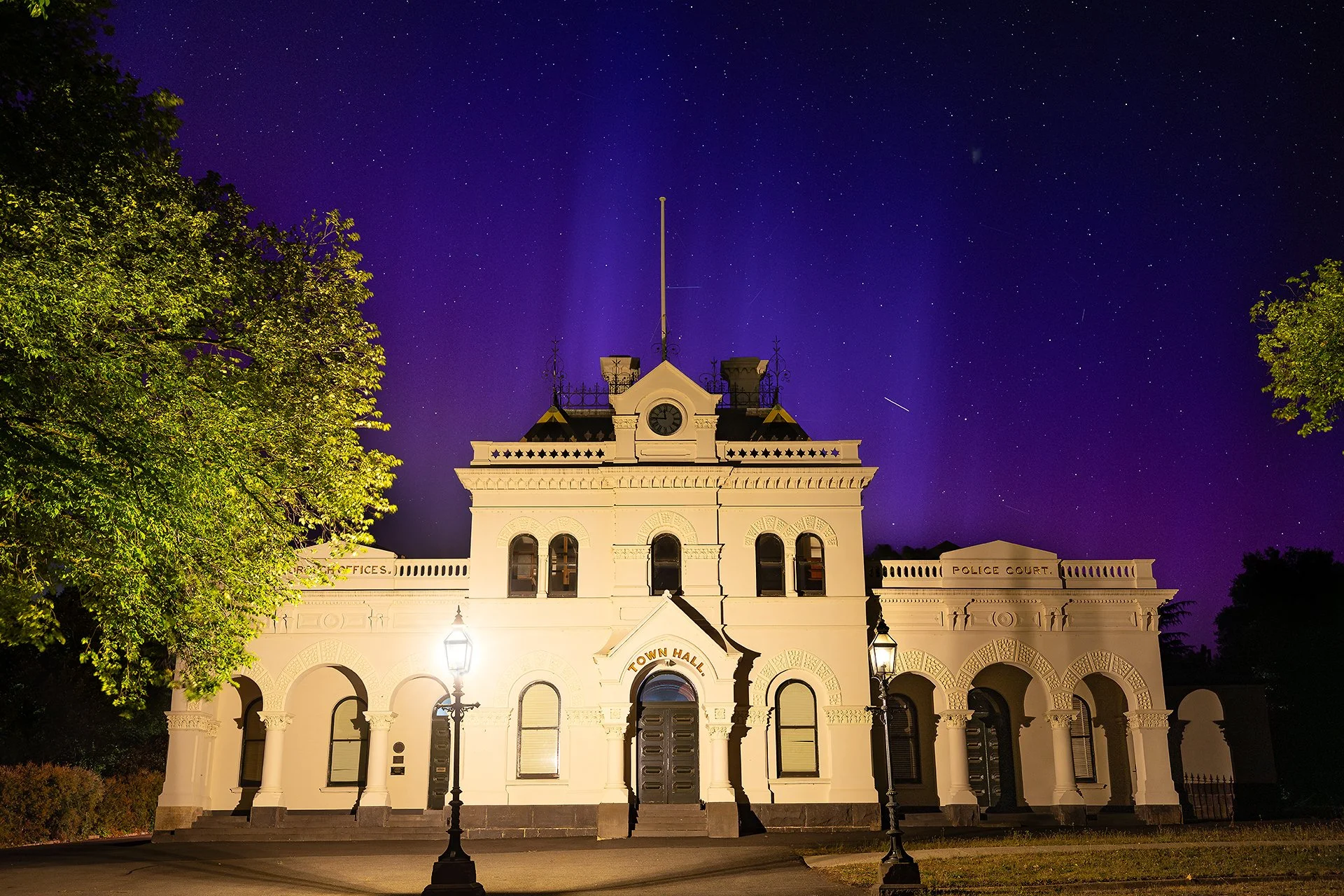
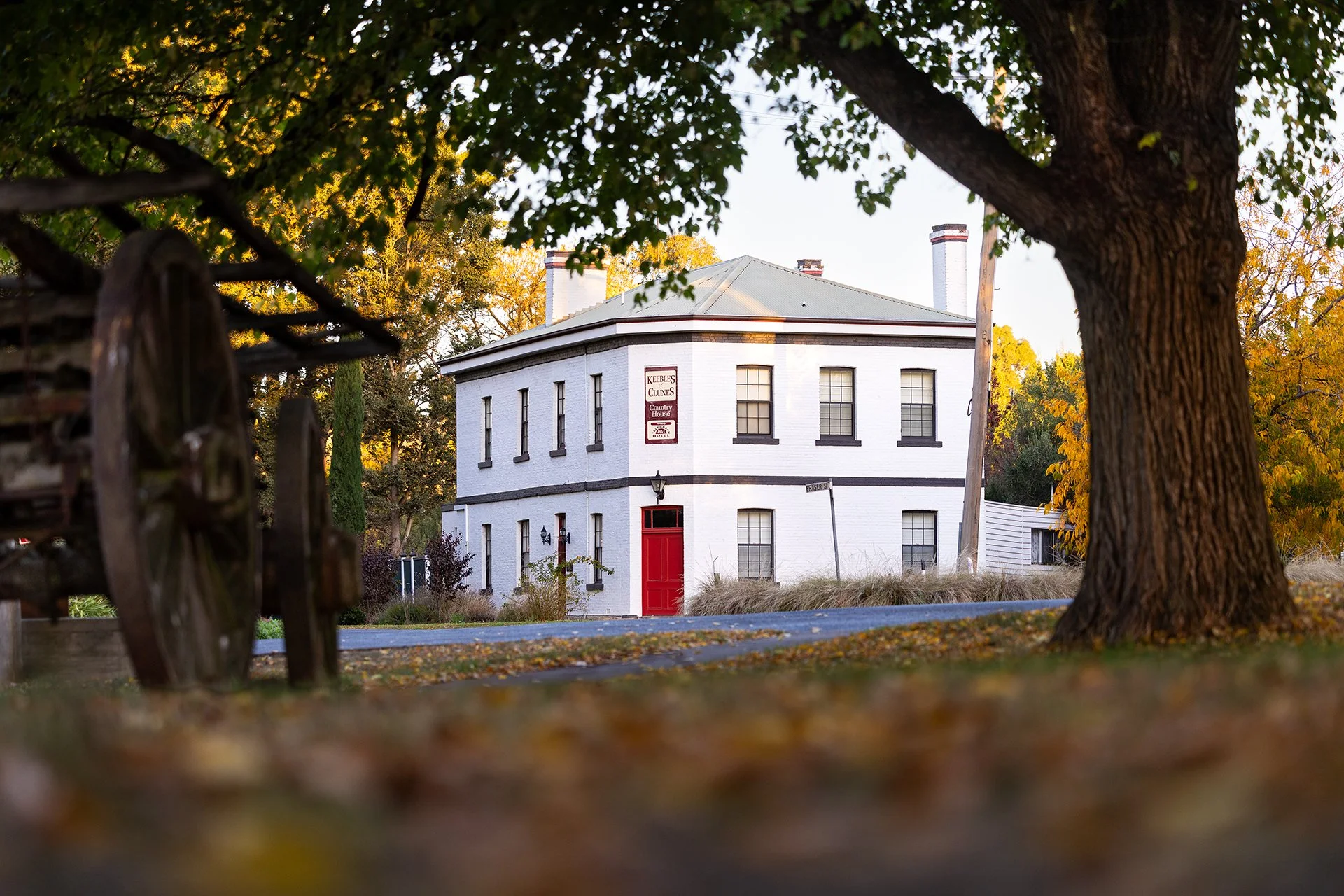
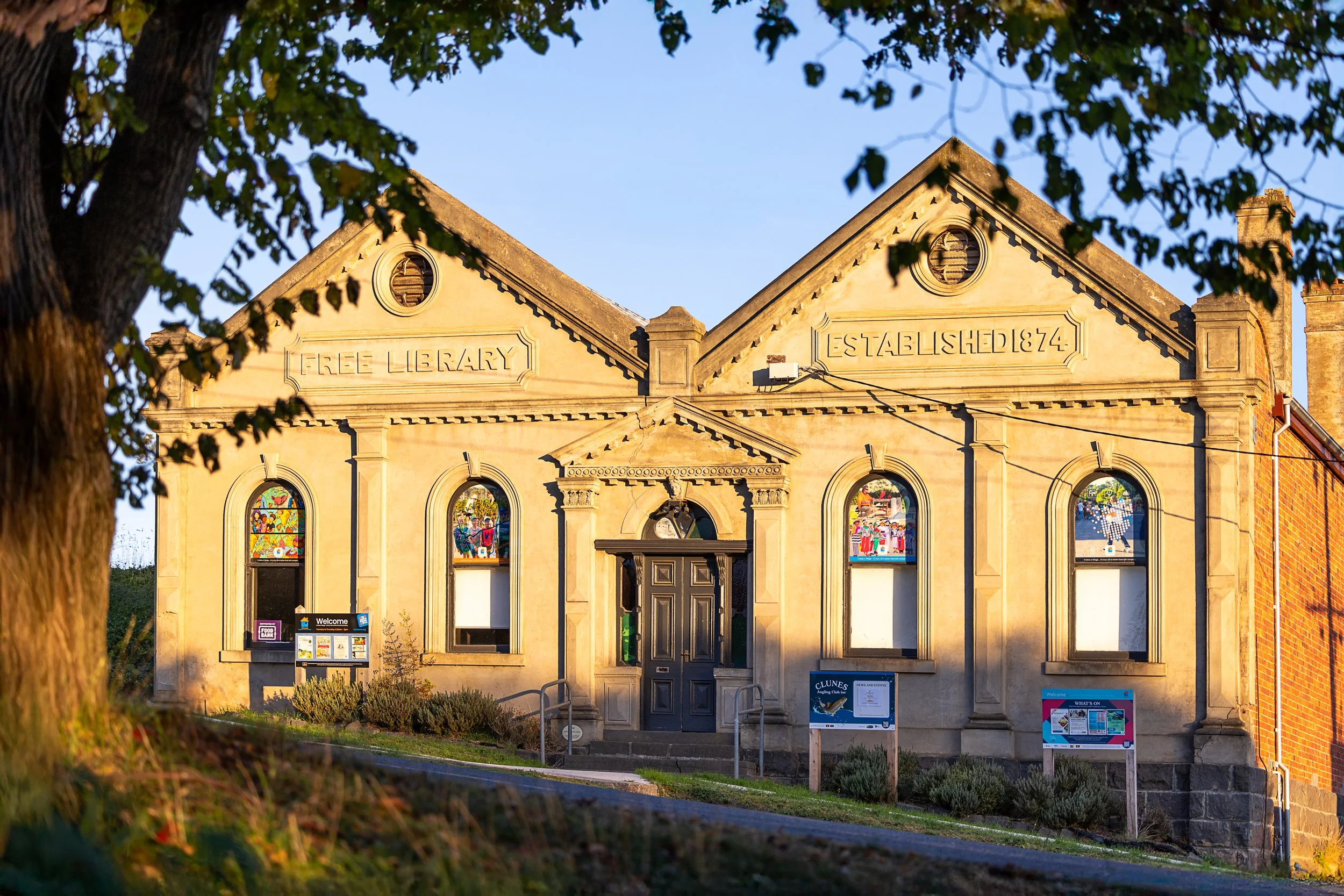
Captured in Autumn 2026 at Sunrise
Fraser Street Clunes (2026)
History
Fraser Street has been the commercial heart of Clunes for more than 160 years. Following the discovery of gold by James Esmond in 1851, Clunes rapidly transformed from a quiet pastoral district into one of Victoria's richest gold mining towns. What began as a settlement of tents, timber buildings and rough tracks soon developed into a thriving township as thousands of miners, merchants and families arrived in search of opportunity.
As mining prosperity peaked during the 1860s and 1870s, many of the temporary timber buildings that once lined Fraser Street were replaced with substantial bluestone and brick commercial premises. Banks, hotels, shops and professional offices were constructed to reflect the confidence and permanence of a community that expected to prosper well into the future. During the same period, landmark public buildings including the Town Hall, Free Library and Post Office were established nearby, creating the remarkable streetscape that survives today.
Unlike many goldfields towns that were extensively redeveloped during the twentieth century, Fraser Street changed remarkably little. The decline of large-scale mining slowed new development, unintentionally preserving much of the town's nineteenth-century character. Wide road reserves, deep bluestone gutters, original shopfronts and historic masonry buildings remain largely intact, allowing visitors to experience a streetscape that closely resembles the one enjoyed by residents more than a century ago. Today, Fraser Street is recognised as one of the most intact gold rush streetscapes in Australia and continues to be the defining feature of Clunes.
The street continues to evolve while honouring its past. Historic buildings now house cafés, galleries, bookshops, antique stores and local businesses, ensuring they remain active parts of everyday life rather than static museum pieces. Fraser Street has also gained international recognition as a filming location for productions including Mad Max, Ned Kelly and Tomorrow, When the War Began, while each year the internationally recognised Clunes Booktown Festival transforms the town into a celebration of books, history and community. More than 170 years after gold was first discovered, Fraser Street remains the heart of Clunes - a place where history is not simply preserved, but continues to be lived.
Architectural Features
Fraser Street is renowned for its remarkably cohesive collection of nineteenth-century commercial architecture. Constructed predominantly from locally quarried bluestone and brick, the buildings display a variety of Victorian architectural styles while maintaining a consistent scale and rhythm that gives the street its distinctive character. Decorative parapets, traditional shopfronts, wide verandahs and finely crafted masonry reflect the prosperity of the gold rush era and the skill of the tradespeople who built them.
Equally significant is the street itself. Its generous width, deep stone gutters and open vistas have survived with remarkably few alterations, creating an authentic historic setting rarely found elsewhere in Australia. Together with the surrounding civic buildings, Fraser Street forms the architectural and cultural heart of Clunes, offering one of the country's finest surviving examples of a nineteenth-century goldfields town.
Continue Exploring Clunes