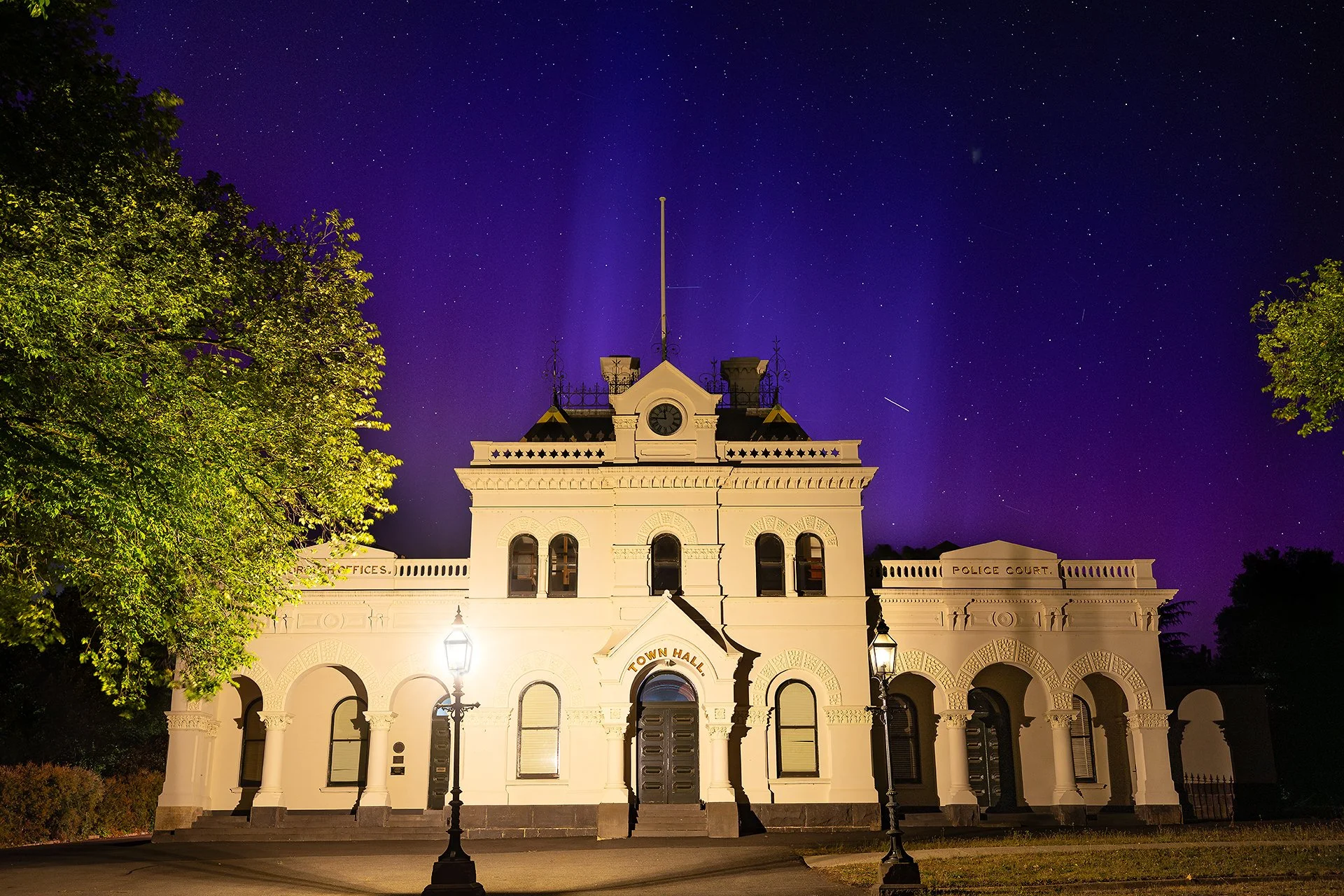
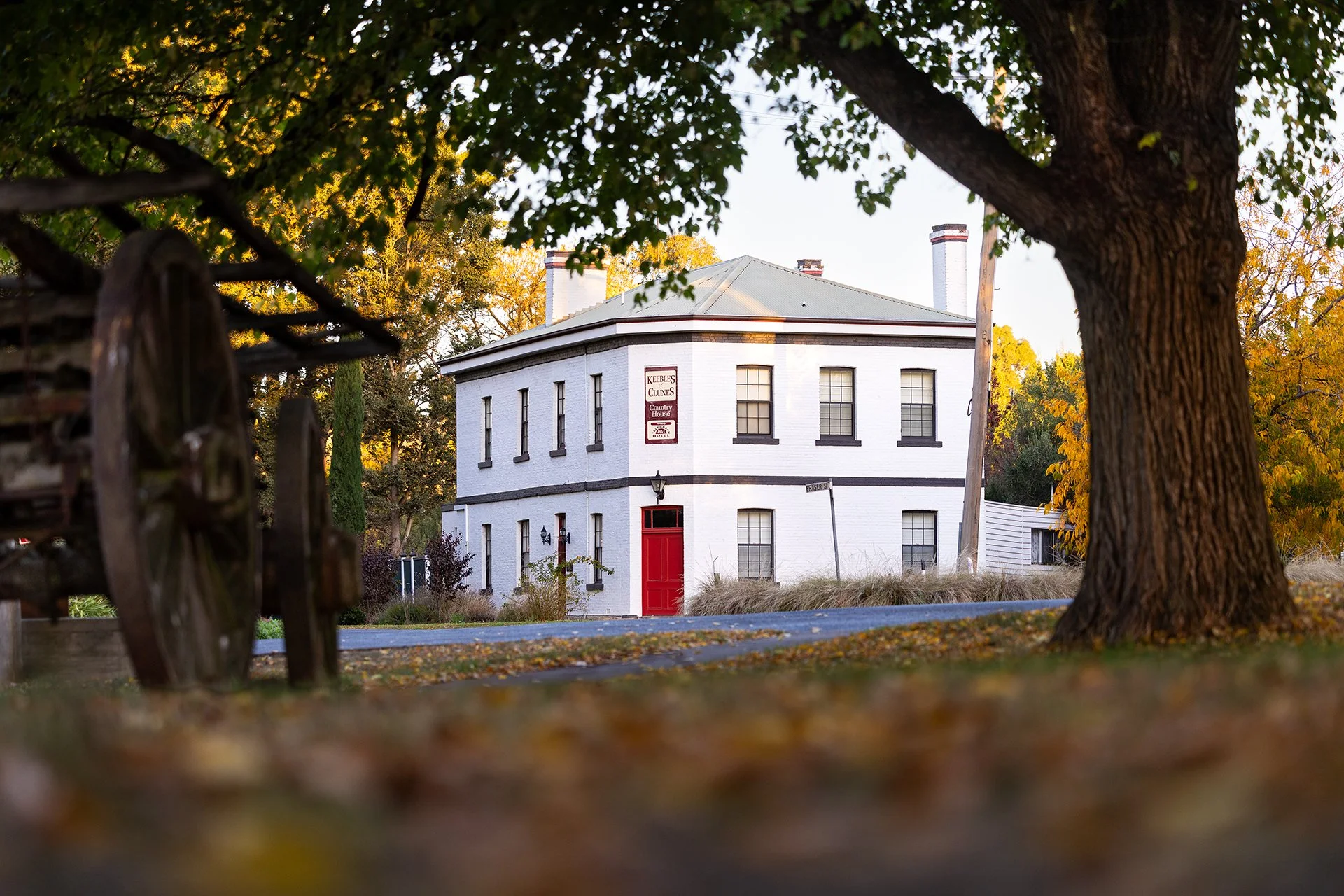
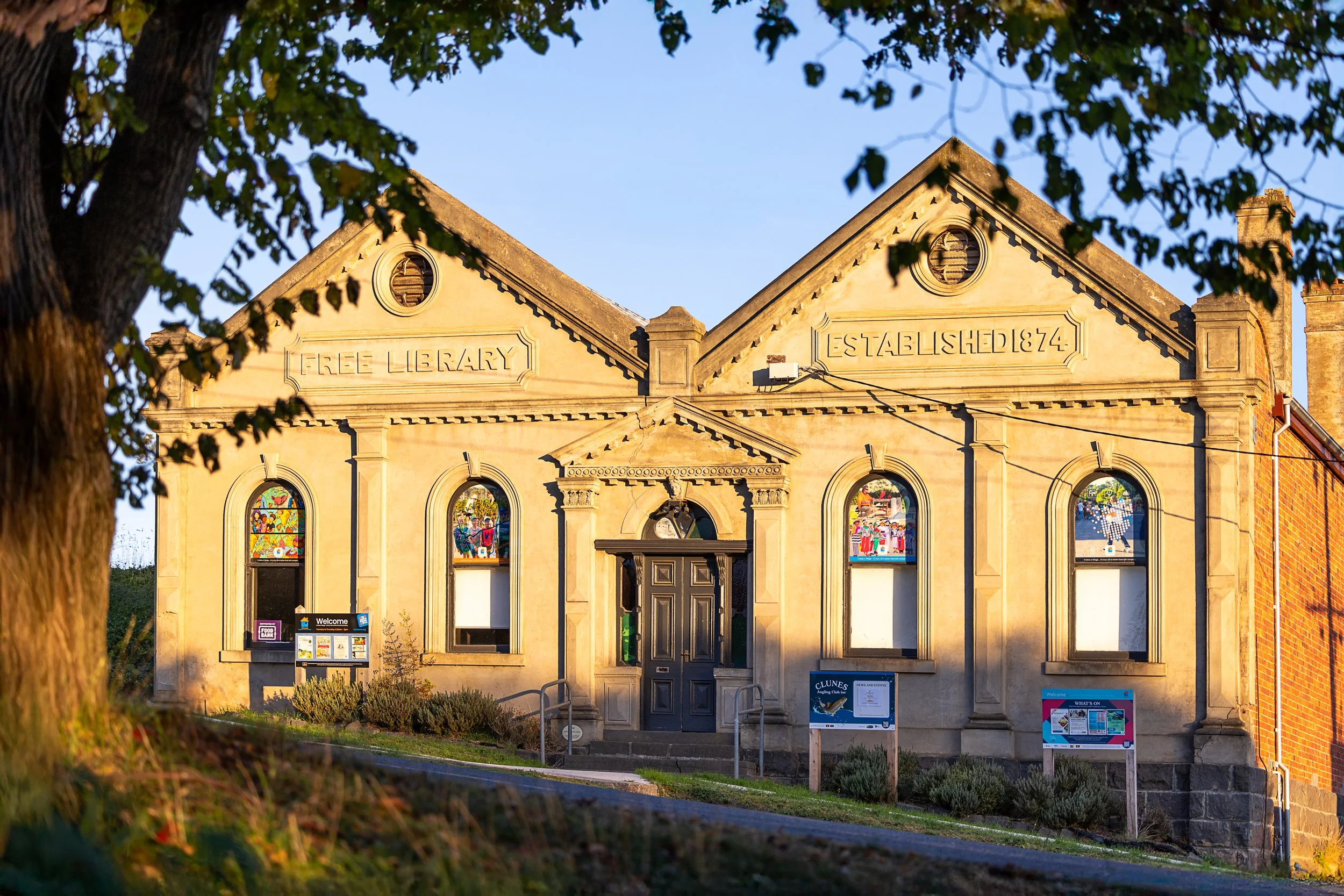
Captured in Autumn 2026 at Sunset
Central Garage (Circa 1920)
History
Constructed around 1920, the Central Garage represented a new chapter in the history of Clunes. While the town's grand bluestone public buildings reflected the prosperity of the nineteenth-century gold rush, the arrival of purpose-built motor garages signalled the beginning of a new era. As motor vehicles gradually replaced horses and drays, businesses such as the Central Garage became essential to everyday life, providing fuel, repairs and mechanical services to both local residents and travellers passing through the district. Historic photographs show the garage operating by the early 1920s, firmly establishing its place within Fraser Street's evolving commercial landscape.
The garage became part of a streetscape that had been shaped decades earlier by buildings such as the Town Hall, Free Library and Post Office. Together, these landmarks tell the story of Clunes' evolution—from a booming gold mining settlement to a thriving regional service town adapting to changing technology and new ways of life. While the surrounding nineteenth-century buildings celebrated the wealth of the goldfields, the Central Garage reflected the growing influence of the motor car and the modern age.
Although its original purpose has long since changed, the building gained international recognition in 1977 when Clunes was transformed into the fictional town of "Wee Jerusalem" during the filming of the original Mad Max, released in 1979. The Central Garage featured prominently in several scenes and remains instantly recognisable to fans of the film. Unlike many movie locations that have changed beyond recognition, the building survives with much of its original appearance intact, making it one of Clunes' most distinctive landmarks. Today it is affectionately known as The Tin Shed, continuing to serve the community as a unique event space and a reminder of both the town's cinematic and commercial history.
Architectural Features
Unlike the elaborate bluestone civic buildings that dominate much of Clunes' historic centre, the Central Garage reflects the practical architecture of the early motor age. Constructed with a simple steel-framed structure clad in corrugated iron, the building prioritised function over decoration, providing wide openings for vehicle access and generous internal space for servicing and repairs.
Its understated industrial character provides an interesting contrast to the surrounding Victorian-era architecture, illustrating how Clunes continued to evolve well beyond the gold rush. Today, the Central Garage remains an important part of the town's heritage streetscape, not only for its architectural simplicity but also for its association with the original Mad Max, ensuring its place in both local history and Australian film history.
Continue Exploring Clunes